



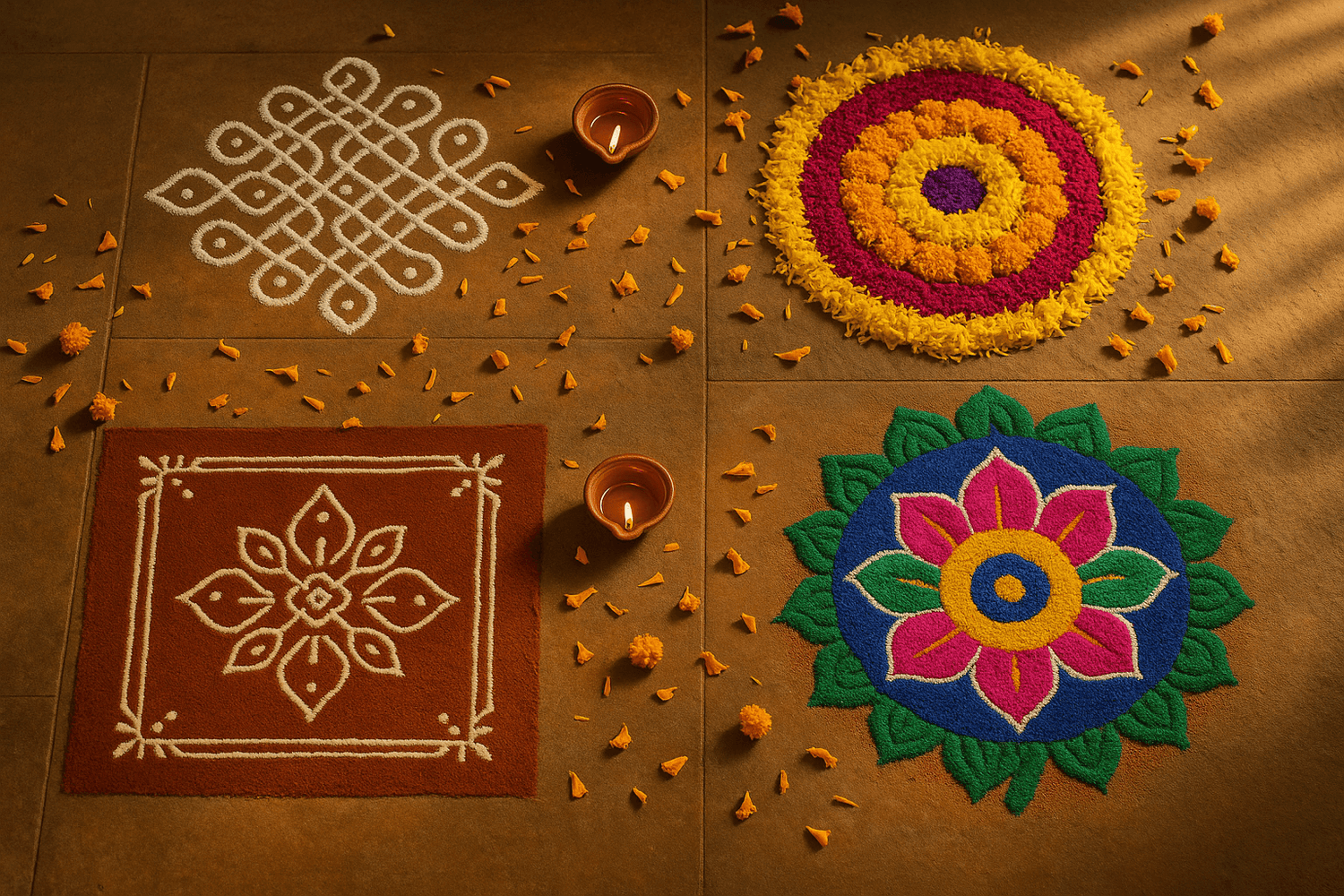
Across India, the art of Rangoli glows at every doorstep — drawn not just with colours, but with culture, prayers, and love. Each region names it differently — Kolam in Tamil Nadu, Mandana in Rajasthan, Alpana in Bengal, Chaitrangan in Maharashtra — yet every form carries the same sacred essence: welcoming prosperity, celebrating beauty, and honouring the divine at the threshold of the home.
India’s Rangoli traditions span over 20 distinct regional styles — each with its own materials, patterns, occasions, and spiritual significance. In this guide, we journey through India, state by state, to understand how this sacred art changes in form but never in spirit.
20 Types of Rangoli Across India — Regional Names, Styles & Traditions
From Maharashtra’s Chaitrangan to Tamil Nadu’s Kolam, Kerala’s Pookkalam to Rajasthan’s Mandana — here is a complete guide to every major Indian Rangoli tradition:
| State / Region | Local Name | Type of Rangoli | Materials Used | Festivals & Occasions |
|---|---|---|---|---|
| Maharashtra | Rangoli / Chaitrangan | Freehand geometric & Chaitrangan folk art | Coloured powder, rice flour | Diwali, Gudi Padwa, daily décor |
| Tamil Nadu | Kolam | Dot-grid line designs (Pulli Kolam) | White rice flour, chalk | Daily ritual, Pongal |
| Andhra Pradesh / Telangana | Muggu / Muggulu | Colour-filled geometric rangolis | Chalk outlines, colour powders | Sankranti, weddings |
| Karnataka | Rangoli / Muggulu | Floral and conch motifs | Rice flour, natural pigments | Ugadi, Deepavali |
| Kerala | Pookkalam | Circular flower-petal rangoli | Flower petals, leaves | Onam, temple events |
| Gujarat | Sathiya / Mandana | Swastik & peacock motifs | Rice paste, coloured sand | Navratri, Diwali |
| Rajasthan | Mandana | Tribal & geometric forms | White lime on red-oxide floor | Diwali, Gangaur |
| Madhya Pradesh | Chowk / Mandana | Sun & peacock motifs | White chalk on clay floor | Holi, Diwali |
| Uttar Pradesh | Chowk-Purna | Rectangular sacred patterns | Red earth base, rice paste | Navratri, marriages |
| Uttarakhand | Aipan | Dotted deity symbols | White rice paste on red clay | Rituals, births, Navratri |
| Bihar | Aripana | Circular yantra designs | Ground rice paste | Chhath Puja, harvest |
| West Bengal | Alpana | Circular cosmic motifs | Rice paste, chalk | Durga Puja, Lakshmi Puja |
| Odisha | Jhoti / Chita | Freehand lotus & vine forms | Rice paste, drawn by fingers | Raja festival, Diwali |
| Assam | Alpana / Kolam | Minimal floral outlines | Rice paste, chalk | Bihu, pujas |
| Manipur | Tanchap | Circular spiritual diagrams | Powdered limestone | Lai Haraoba |
| Punjab / Haryana / HP | Chowk-Purna | Swastik & diya symbols | Rice paste, chalk | Diwali, Baisakhi |
| Goa | Rangavalli | Circular rangoli with shells | Bright powder, rice, diyas | Diwali, Tulsi Vivah |
| Sikkim & North-East Hills | Mandala-style Rangoli | Lotus & circle patterns | Coloured sand, petals | Diwali, Losar |
| Tripura | Alpana | Deity & circular motifs | White/red rice paste | Durga Puja |
| Meghalaya | Floral Décor | Petal & leaf arrangements | Flowers & leaves | Harvest & Christmas |

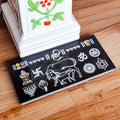
🎨 CHITRASHILA® Gau Mata Chaitrangan Rangoli
Granite Printed • 12×6 inch • 12 Sacred Symbols • COD Available
₹529
Buy Now →🏠 Also Explore — Granite Printed Rangoli Collection


Swipe to view more →
5 Sacred Rangoli Traditions That Define India’s Heritage
1. Kolam — Tamil Nadu’s Daily Devotional Art
Kolam is the most widely practised daily Rangoli tradition in India. Drawn at the entrance of every devout South Indian home at sunrise — typically in white rice flour — the Kolam is an invitation to Goddess Lakshmi and a protection against negative energy crossing the threshold. The famous Pulli Kolam (dot kolam) is created by placing dots in a precise grid and connecting them with flowing curved lines — a form of sacred geometry requiring meditative focus and generations of practice. Today, reusable kolam stencils make this daily tradition accessible for every household.
2. Chaitrangan — Maharashtra’s Sacred New Year Rangoli
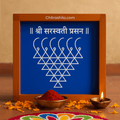
Chaitrangan is the most symbolically rich Rangoli tradition of Maharashtra — drawn during the Chaitra month (around Gudi Padwa) at the main entrance with exactly 12 specific auspicious symbols. Each symbol carries a distinct sacred blessing — Shree, Laxmi Charan Paduka, Gopadma, Tulsi Vrindavan, Omkar, Swastik, Surya, Saraswati, Shankha, Sudarshan Chakra, Kaasav, and a central deity motif. To learn more, read our complete guide: What is Chaitrangan and its cultural significance.
3. Pookkalam — Kerala’s Floral Devotional Art
Pookkalam is Kerala’s unique Rangoli tradition — circular arrangements of fresh flower petals created during Onam to welcome King Mahabali’s annual return. Unlike powder rangolis, Pookkalam is made entirely of flowers and leaves — a living, fragrant offering renewed fresh each day of Onam. In temples across Kerala, Pookkalam is a daily ritual offering to the deity.
4. Mandana — Rajasthan’s Sacred Earth Art
Mandana is painted on red-oxide clay floors with white lime paste in Rajasthan and Madhya Pradesh — a tribal art form with bold geometric motifs of the sun, peacock, and sacred trees. Drawn by women of the Meena community for auspicious occasions, vrat, and festivals, Mandana’s red-and-white palette is instantly recognizable as Rajasthan’s sacred art signature.
5. Alpana & Aripana — Bengal and Bihar’s Sacred Geometry
Alpana (Bengal) and Aripana (Bihar) are devotional floor arts created with rice paste during Durga Puja, Lakshmi Puja, and Chhath Puja. Bengal’s Alpana features circular, cosmic motifs — lotuses, fish, and sacred diagrams in intricate white patterns. Both traditions are passed from mothers to daughters and form an essential part of the domestic devotional life of eastern India.

🎨 CHITRASHILA® Padi Kolam Wooden Stencil
Reusable Wooden Stencil • 10×10 inches • Perfect Kolam Every Time
₹334
Buy Now →🙏 Also Explore — Reusable Kolam & Rangoli Stencils


Swipe to view more →
What All Rangoli Traditions Share
Despite their extraordinary diversity, every form of Rangoli across India shares the same sacred intentions:
- Purity — made with natural, auspicious materials that honour the sacredness of the threshold
- Positive energy — drawn at sunrise or before festivals to invite good energy and ward off negativity
- Devotion — each design is an offering, not merely decoration — a daily act of prayer made visible
- Artistry through tradition — passed down through generations from mothers to daughters, carrying cultural memory
- Sacred geometry — the symmetry and patterns of Rangoli mirror the balance and order of the universe
How to Keep the Rangoli Tradition Alive at Home
In today’s busy households, the daily drawing of Rangoli can be a challenge. Here are the three most popular ways devout Indian households are keeping this tradition alive:
- Reusable stencils — wooden kolam and rangoli stencils create perfect traditional designs in under a minute
- Permanent granite tiles — granite printed Chaitrangan and kolam tiles place the sacred art permanently at your door
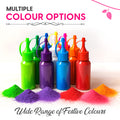
- Rangoli colour powders — vibrant natural rangoli colour powders make freehand and stencil-based Rangoli more joyful than ever
🌈 CHITRASHILA® Rangoli Color Powder — Grand Pack of 10
10 Vibrant Colours • Festival & Daily Rangoli • COD Available
₹189
Buy Now →🎈 Also Explore — CHITRASHILA® Rangoli Colour Powder Packs


Swipe to view more →
Frequently Asked Questions
What is Rangoli and why is it made?
Rangoli is a traditional Indian sacred floor art drawn at home entrances, pooja rooms, and public spaces during festivals and auspicious occasions. It is made as an offering to welcome the divine, invite prosperity and positive energy, and celebrate the beauty of India’s devotional heritage. Every region of India has its own name, style, and tradition of Rangoli — from Kolam and Chaitrangan to Alpana, Mandana, and Pookkalam.
How many types of Rangoli are there in India?
India has over 20 distinct regional styles of Rangoli — including Kolam (Tamil Nadu), Chaitrangan (Maharashtra), Pookkalam (Kerala), Mandana (Rajasthan/MP), Alpana (Bengal), Aripana (Bihar), Muggu/Muggulu (Andhra Pradesh), Aipan (Uttarakhand), Jhoti-Chita (Odisha), Chowk-Purna (UP/Punjab), Rangavalli (Goa), and many more. Each carries distinct materials, patterns, and sacred significance.
What is the difference between Kolam and Rangoli?
Kolam is the South Indian name for sacred floor art — specifically associated with the dot-based (Pulli Kolam) geometric tradition of Tamil Nadu, Kerala, and Andhra Pradesh. Rangoli is the broader North and Central Indian term for the same sacred practice. Both carry the same sacred intention — different names, same devotion.
What materials are traditionally used for Indian Rangoli?
Traditional Rangoli materials vary by region — white rice flour for Kolam, natural colour powders for Rangoli, white lime paste for Mandana, rice paste for Alpana and Aripana, flower petals for Pookkalam. Modern rangoli colour powders have made the art more vibrant while honouring the tradition of natural, sacred materials.